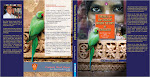
Aesop’s Fables, Ovid’s Metamorphosis, Boccaccio’s The Decameron and the Indian Jataka tales, the Panchatantra, Somadeva’s Katha-sarit-sagara are among the forerunners of the short story. The advent of its present form can be traced to the early 19th century and of its parent, the novel, to the 18th century. The brevity of its narrative, single action, and thematic focus naturally met with a wordwide reception and thus short fiction matured into an artistic genre, casting its net across the world. Murli Das Melwani’s book makes a historical survey right from the beginning to the present-day. Such a wide-ranging critical survey has hitherto not been attempted. He raises two weighty questions that merit our attention. First, has the Indian short story writer contributed anything of value to it? and second, has his work made the form more flexible, as say, Hemingway’s or Chekov’s did? Melwani subjects all short-story writers — 66 in all — from 1835 to 2008 to a close scrutiny. The stories are not discussed individually, though some specimens are close-read and locally analysed. But a writer’s entire collection is examined and evaluated, with conclusions drawn at the end.
Mulk Raj Anand, R.K. Narayan, and Raja Rao, who represent the first flowering (1935-45) of this genre, responded to the nationalist movement, each in his own way — Mulk Raj Anand, the social activist, presenting a true vision of Indian life; R.K. Narayan, with his perception of the average as positive, exploring the nature of life and reality; and Raja Rao experimenting with form. The second flowering (1960-70) looked for answers to the question often raised in academic circles: can the Indian sensibility be expressed in English? Ruth Prawar Jabwalla’s “detached involvement with the Indian situation,” and Bhabani Bhattacharya’s professionalism and the easy readability of his stories supply some answers to that question. The 1970s more than fulfil the expectations of the ‘60s. The decade is marked by an endless variety in the handling of themes and variations, coupled with varying modes and techniques of narration influenced by Russian and American short fiction.
Galaxy of writers
We have a galaxy of writers — Keki Daruwalla, Anita Desai, Shashi Deshpande, Arun Joshi, Kamala Das and a host of others — participating in the ongoing process of openness in form, reliable and unreliable narration with multiple points of view, and shifting focalisation. The period between 1980 and 2008 reflects, in the words of Melwani, a “burgeoning creativity.” There are more women writers now than at any time in the past. Altering perspectives in man-woman relationships, alienation in modern life, and the impact of feminism and feminist theories on the academia have supplied meat and juice to a potential creative writer. As readership expanded across the world, Indian stories tended to get translated into foreign languages. The author is quite right in his assessment that the short story has covered a wider range of subjects with a larger gallery of characters and that the record of Indian life is more authentic in this genre than in the novel. The ‘little’ magazine that is most selective in choosing the material for publication — getting a story published in it is considered highly prestigious — has done much to improve the quality of this genre. Paperback print editions and online literary magazines too have helped a great deal in popularising this form. He suggests that instituting literary prizes and bringing out a collection of the best short stories every year will encourage new talent.
Melwani adroitly integrates his critical comments on the works with the short introductory remarks of each section on the evolving political and social mores of the times. On the whole, the book is absorbing and well-researched. It is a convincing, lively narrative history of the short story that still remains a developing literary form. We need more — and yet more — of such narrative histories that can discuss changes in artistic trends, materials, techniques, et al. The scope for the Indian short story is indeed boundless.
Showing posts with label Writing. Show all posts
Showing posts with label Writing. Show all posts
Thursday, September 2, 2010

Sunday, June 29, 2008
Writing is Fundamental
By a strange coincidence, the better halves of most of my buddies are either teachers or librarians. Since I enjoy reading, I could not be better connected. One of my connections, Kathy Letchworth, teaches eighth grade in a middle school in Plano. On the last Friday of every month, she invites a guest speaker to address her students.
"I would like you to share your life lessons and give them advice," she told me. Since I haven't attained guruhood as yet, I told Kathy that I'd settle for something more prosaic. I'd prefer to talk about the importance of writing in everyday life.
I am a person from the Orient, and I was not sure what my first classroom experience in the U.S would be. My doubts were unfounded. Kathy's students were polite, disciplined, interactive and respectful.
I made my points briefly (I hope). Writing figures into many everyday activities, from framing an e-mail, compiling a to-do list, writing a memo in an office to sitting down to pen an old-fashioned letter. I asked the class to think of the situations that occur in the course of a day that call for some sort of communication by writing. It became clear that words are like money. Words are the notes and coins we use when we transact business, deal with issues that affect our interests, and, above all, when we express our feelings.
The interaction threw up two interesting facts: First, we spend as much time each day writing as we do eating our three basic meals – that is, 43,200 minutes a year; second, IM (instant messaging) is considered old hat now, since TM (text messaging) is more flexible.
There was occasion to share with the students instances where my published writing had telescoped distance and connected me with like-minded people; introduced me on a personal level to wonderful people whom I would never have come to know otherwise; and, closer to home, had helped to turn acquaintances into friends.
Once the interaction started, the questions went beyond writing. The healthy curiosity of the young touched on my background, my travels and my opinions on issues like arranged marriages. One fact startled them: I've seen girls and boys in a Third World country attend an open-air school where, because trees grew at great distances from each other in that arid climate, different grades shared two sides of the same tree.
The greatest surprise came a few days later, when Kathy forwarded me handwritten letters from each of her students – 21 in all. The students shared their reactions to my views on writing.
Reading these responses gave me a sense of fulfillment. They were my reward. I could not have asked for a better one. Asia wrote: "I never thought of writing in the way you explained it. I always thought the writing process was: plans, drafts, editing and final copy."
I had told them that writing was more of a mental and less than a physical act. Whether the medium is the computer, TM, IM or plain old-fashioned paper, the process of writing remains the same. Asia went on to make a critical connection: "Maybe one day I will use this information for writing music."
I was gratified to see that most of them had been forthright. "When you said writing creates magic, I wasn't sure I knew what you were talking about. After you explained it, it made me realize I can write stories and make them come to life," wrote Angel.
Hunter framed his reaction this way: "Writing is one way I can release all my feelings. ... I can just spill it out, all on paper."
The letters proved that the young are willing to open up, share their thoughts and feelings and bridge the generation gap, if we older folk have the time to listen
Appeared in The Dallas Morning News dated 5th June 2008
Subscribe to:
Posts (Atom)